


PART OF ESCALATORS | EXPORTERS | TÜRKİYE
Türkiye Part of Lift, Skip Hoist or Escalators Exporters
Turkey has established itself as a significant global player in the elevator, escalator, and lifting equipment parts industry. Classified under HS Code 8431 ("Parts of lifts, skip hoists or escalators"), this sector encompasses a wide range of precision-engineered components that are essential for the safe and efficient operation of vertical transportation systems worldwide. The Turkish elevator and escalator parts industry benefits from decades of manufacturing expertise, a highly skilled workforce, competitive production costs, and a strategic geographic location that bridges Europe, Asia, and the Middle East. Turkish manufacturers supply critical components such as guide rails, drive systems, safety gears, door mechanisms, escalator steps, control panels, and hydraulic units to markets across more than 100 countries. The sector's growth is further supported by Turkey's strong industrial base in metalworking, steel fabrication, and precision engineering, making it a preferred sourcing destination for international elevator OEMs and construction companies seeking reliable, high-quality parts at competitive prices. For more information on related sectors, see Turkey Lift and Skip Hoist Exporters and Turkey Construction and Mining Machinery.
Table of Contents
- Company Profiles — Turkish Elevator & Escalator Parts Suppliers
- LÖHER ASANSÖR (Meteor Löher) — İzmir
- GÜMÜŞ MAKİNA — Ankara
- ÜÇGEN MÜHENDİSLİK (Üçgen Engineering Group) — Malatya
- İLERİ MEKANİK (İleri Group) — Kocaeli
- Comprehensive Guide to HS Code 8431 Components
- Parts of Lifts (Elevators)
- Parts of Skip Hoists
- Parts of Escalators
- HS Code 8431 Classification & Subcategories
- Turkey's Export Advantage
- Safety Standards & Certifications
- Technology Trends
- Future Outlook
- Frequently Asked Questions (FAQ)
Company Profiles — Turkish Elevator & Escalator Parts Suppliers
Turkey is home to a diverse range of manufacturers and exporters specializing in components for lifts, skip hoists, and escalators. The following company profiles highlight four notable Turkish firms that operate in this sector, each bringing unique capabilities and product offerings to the global marketplace. From full-spectrum elevator component manufacturing to precision engineering for industrial OEMs, these companies represent the breadth and depth of Turkey's elevator parts industry.
LÖHER ASANSÖR VE YÜRÜYEN MERDİVEN SAN. TİC. A.Ş. (Meteor Löher) — İzmir
Founded in 1967 in İzmir, Löher has been operating for over 56 years in the Turkish elevator and escalator industry. In 2022, Löher became part of the Meteor Companies Group and now operates as Meteor Löher. The company has a 22,000 m² production facility in the İzmir Free Zone, which serves as a major hub for both manufacturing and export operations. Löher began its escalator R&D activities in 1999 and developed its own proprietary escalator designs in cooperation with universities, TTGV, and TÜBİTAK, becoming the first Turkish company to export escalators from Turkey. Their products are exported worldwide including to Canada, USA, Germany, Austria, and China. The company holds exclusive distributorships for several regions in Iraq, further expanding its international footprint in the vertical transportation market.
Products:
- Escalators (full design, manufacturing, installation)
- Moving walkways
- Elevators (complete systems)
- Elevator spare parts
- Disabled access platforms (vertical lifting platforms, wheelchair transport platforms, stair platforms)
- Modernization services
- Maintenance and safety inspection services
GÜMÜŞ MARANGOZ MAKİNİML.İNŞ.İTH.İHR.SAN.TİC.LTD.ŞTİ. (Gümüş Makina) — Ankara
Gümüş Makina is a machinery trading and manufacturing company based in Ankara, primarily focused on industrial machinery, metalworking, and woodworking equipment. The company operates in both new and used machinery markets, offering imports and exports. Their product portfolio includes lathe machines, milling machines, press machines, drilling machines, CNC machining centers, and surface grinding machines. The company also operates in the construction sector and has import/export capabilities that support manufacturing of various industrial components and structural parts used in elevator and construction machinery. As an authorized dealer for international machinery brands including Baoji, Silver, United, and W.D.M., Gümüş Makina serves as a critical link in the supply chain for precision metal components that are used in the fabrication of elevator and lifting equipment parts.
Products:
- Lathe machines
- Milling machines
- Press machines (eccentric and hydraulic)
- Drilling machines
- CNC machining centers
- Surface and cylindrical grinding machines
- Welding machines (MIG-MAG, Argon, TIG, spot welding)
- Edge banding machines
- Used industrial machinery
- Metalworking equipment
ÜÇGEN MÜHENDİSLİK TAAH. İNŞ. ASANSÖR KLİMA SAN LTD.ŞTİ. (Üçgen Engineering Group) — Malatya
Üçgen Mühendislik is a Turkish engineering group operating through three brands: Dündar Asansör (elevator installation), Kernek Asansör (elevator manufacturing), and Üçgen Mühendislik (engineering and contracting). The group has a factory in the 1st Organized Industrial Zone, Yeşilyurt, Malatya, and produces a comprehensive range of elevator components and systems. The company is one of Turkey's most complete elevator parts suppliers, covering everything from drive systems and safety devices to door mechanisms and guide rail accessories. Their full-spectrum approach to elevator component manufacturing makes them a key supplier for both domestic elevator installers and international buyers seeking Turkish-made parts under HS Code 8431. See also Turkey Elevator Guide Rail Manufacturers for more on Turkey's guide rail sector.
Products:
- Drive systems: geared machines, gearless machines, lift motors
- Hydraulic systems: hydraulic units, pistons, tanks, valves, pipes, rupture valves
- Safety devices: overspeed governors, safety gears (instantaneous and progressive types), buffers
- Control systems and signalization: lift controllers, inverters, encoders, shaft information systems, evacuation systems, COPs/LOPs/indicators/buttons, photocells, light curtains, overload sensors
- Elevator cars: passenger, freight, hospital, high-speed, panoramic, vehicle lift cars
- Door systems: landing door mechanisms, panels, frames, locks, dampers, cams, car door mechanisms and panels
- Guide rails and accessories: guide rails, fishplates, rail clips, rail brackets, anchor systems, guide shoes/rollers, lubricators, isolation/anti-vibration pads
- Suspension systems: car and CW slings, CW blocks, steel ropes, compensation chains, diverting pulleys
İLERİ MEKANİK MAK.KALIP İMALAT SAN.VE TİC.LTD.ŞTİ. (İleri Group) — Kocaeli
İleri Group is a global OEM partner in engineered control technology solutions with over 40 years of manufacturing and product development experience. The company operates facilities in both the United States and Turkey, serving as a Tier 1 supplier to mainstream OEMs worldwide. İleri Group focuses on designing and manufacturing precision steering, motion control, access control, and structural systems primarily for the commercial vehicle, off-highway, construction, and agricultural equipment industries. Their precision engineering capabilities and structural fabrication expertise are relevant to the manufacturing of specialized components and parts used in lifting and construction equipment. For companies involved in industrial lifting and material handling, İleri Group represents the kind of advanced Turkish manufacturing capability that supports the broader ecosystem of HS Code 8431 component suppliers. Learn more about related Turkish industrial sectors at Turkey HS Code 842710 Lifting Equipment and Torbali Construction Exporters.
Products:
- Steering solutions: steering columns, consoles, steering wheels
- Motion controls: electromechanical solutions, hand throttles, parking brakes, multilever controls, single lever controls, pedal and firewall assemblies
- Access controls: handles, keys, latches, strikers, door holdbacks, window stays, specialty hinges
- Structural systems: chassis, welded fabrications, structural components
Part of Lift, Skip Hoist or Escalators: A Comprehensive Guide to HS Code 8431 Components
The international trade classification HS Code 8431 encompasses a critical category of industrial components: parts of lifts (elevators), skip hoists, and escalators. This harmonized system code is used by customs authorities worldwide to classify and regulate the import and export of these specialized mechanical and electrical parts. Understanding the full scope of HS Code 8431 is essential for manufacturers, exporters, importers, and procurement professionals working in the vertical transportation and industrial lifting sectors. Turkey, with its robust manufacturing base and strategic location at the crossroads of Europe, Asia, and the Middle East, has emerged as a leading exporter of these high-value components. This comprehensive guide explores each major subcategory of HS Code 8431, examining the key components, their functions, materials, and the Turkish companies that produce them for global markets.
Related international trade resources include UK Importers for HS Code 843131 Parts of Lifts, UK Importers for HS Code 842810, and UK HS Code 843139 Importers.
Section 1: Parts of Lifts (Elevators)
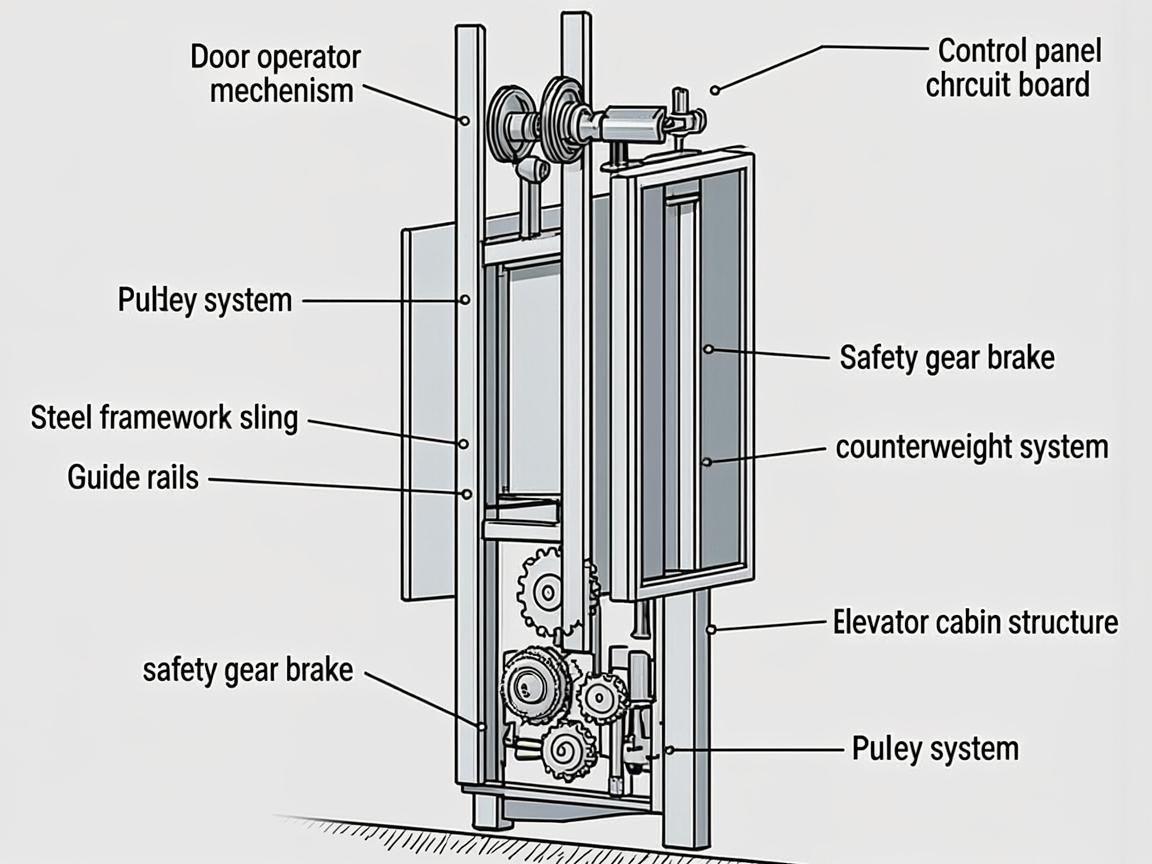
Lifts are permanent enclosed platforms used to transport people or freight vertically between building floors. They represent the largest single subcategory within HS Code 8431 and include a complex array of mechanical, electrical, and safety components. Each component plays a vital role in ensuring the lift operates safely, smoothly, and efficiently. Below is a detailed examination of the principal parts that fall under this classification.
Lift Car Slings
Lift car slings are the structural steel frameworks that directly support the elevator cabin (car frame) and connect it to the suspension ropes or chains. These slings are engineered from high-tensile steel and are designed to bear the full weight of the car, its rated payload, and dynamic loads generated during acceleration and deceleration. The sling assembly typically includes the car frame, crosshead, and safety plank, all of which work together to distribute forces evenly across the suspension system. In the event of an emergency stop or free-fall condition, the sling framework is designed to withstand extreme shock loads without structural failure. Turkish manufacturers like Üçgen Engineering Group produce a full range of car slings and counterweight (CW) slings for passenger, freight, hospital, and high-speed elevator applications, using cert
Guide Rails
Guide rails are the vertical steel tracks installed inside the elevator shaft that keep the car and counterweights aligned during vertical travel. These rails are typically manufactured from cold-drawn or machined hollow steel sections with precision-ground running surfaces that provide smooth, low-friction contact for the guide shoes or rollers attached to the car frame. Guide rails must meet extremely tight dimensional tolerances to prevent vibration, noise, and uneven wear during operation. They are secured to the shaft walls using rail brackets, clips, and anchor systems, and sections are joined together using fishplates to create a continuous running surface. Turkey is a significant producer of elevator guide rails, with manufacturers offering T-type and hollow guide rails in various sizes and steel grades. The guide rail system is critical for the safe operation of the elevator, as it also provides the surface against which the safety gear clamps during an emergency braking event. For specialized guide rail suppliers, see Turkey Elevator Guide Rail Manufacturers.
Door Operators
Door operators are the motorized mechanisms that automatically open and close the elevator landing doors and car doors in a synchronized manner. These units typically consist of a DC or AC motor, gearbox, belt or chain drive mechanism, and an electronic controller that manages the door's speed profile, acceleration, and braking. Modern door operators use variable frequency drives (VFDs) and microprocessor-based controllers to ensure smooth, quiet, and reliable door operation with precise positioning at each floor landing. The door operator must also incorporate safety features such as obstacle detection (using photocells or light curtains) and automatic reopening if an obstruction is detected. Turkish elevator parts suppliers produce both center-opening and side-opening door operators for a wide range of car sizes and speed ratings. The reliability of the door operator is paramount, as door-related issues are among the most common sources of elevator service calls and passenger entrapment incidents.
Safety Gear
Safety gear is the mechanical braking device that activates to stop and hold the elevator car in place if it exceeds a predetermined speed or if the suspension system fails. There are two main types of safety gears: instantaneous (used on low-speed elevators) and progressive (used on medium and high-speed elevators). Instantaneous safety gears apply braking force abruptly, clamping onto the guide rails and bringing the car to an immediate stop. Progressive safety gears, on the other hand, apply braking force gradually, decelerating the car in a controlled manner to minimize passenger discomfort and reduce the risk of injury. Both types are triggered by the overspeed governor, which is a centrifugal speed-sensing device mounted in the machine room. Turkish manufacturers such as Üçgen Engineering Group produce both instantaneous and progressive safety gears that comply with EN 81 safety standards, using high-friction materials and precision-machined components to ensure reliable activation under all conditions.
Interlock Mechanisms
Interlock mechanisms are electromechanical safety locks installed on the landing doors that prevent the doors from being opened unless the elevator car is safely at the landing. These devices are critical safety components that protect passengers and maintenance personnel from falling into the elevator shaft. The interlock consists of a mechanical latch that engages with a strike plate mounted on the car door, and an electrical contact that signals the elevator control system whether the door is securely locked. When the car arrives at a floor, a cam on the car door activates the interlock, releasing the mechanical latch and allowing the landing door to be opened. If the car is not at the landing, the interlock remains engaged, and the landing door cannot be opened. Interlocks are manufactured to strict safety standards and must undergo rigorous endurance and reliability testing. Turkish elevator parts manufacturers produce interlocks in various configurations to suit different door types and installation requirements.
Control Panels
Control panels are the electrical and electronic units that manage the overall operation of the elevator system, processing floor selection commands, controlling the motor drive, monitoring safety devices, and managing door operations. Modern elevator control panels use programmable logic controllers (PLCs) or dedicated microprocessor-based controllers that implement sophisticated dispatching algorithms to optimize passenger waiting times and energy consumption. The control panel interfaces with all major elevator subsystems including the motor drive (inverter), door operators, safety circuits, load weighing devices, car and landing call stations (COPs and LOPs), shaft information systems, and emergency communication systems. Turkish companies like Üçgen Engineering Group supply complete control panels, inverters, encoders, and signalization components for elevator systems of all sizes and speed ratings. The control panel is essentially the brain of the elevator, and its reliability and programming quality directly affect the system's performance, energy efficiency, and passenger experience.
Section 2: Parts of Skip Hoists
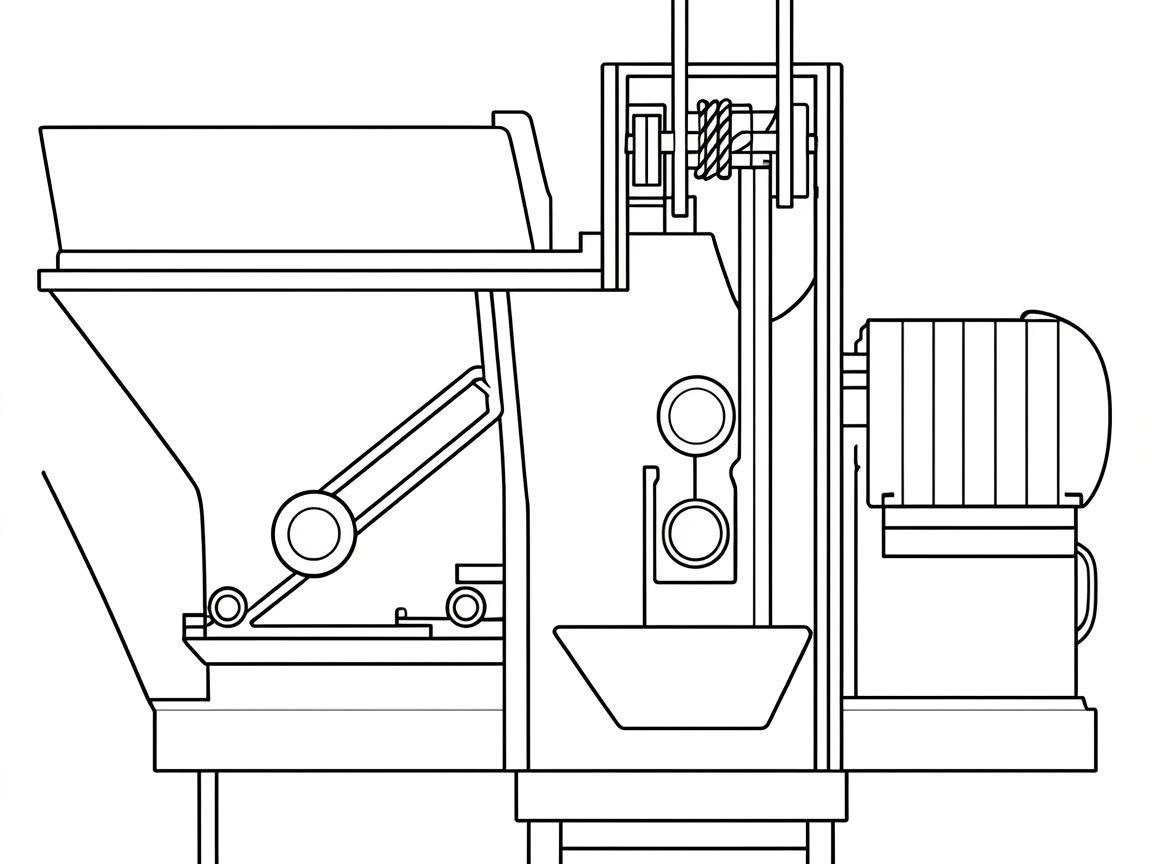
Skip hoists are specialized industrial lifting systems used on construction sites, mining operations, and manufacturing facilities to transport bulk materials such as drywall, gravel, concrete, sand, and excavated earth up a steep incline or vertical path using a heavy-duty bucket or "skip." Unlike passenger elevators, skip hoists are designed for rugged industrial environments and must withstand continuous heavy loading, abrasive materials, and extreme operating conditions. The components of skip hoists classified under HS Code 8431 are built to significantly higher load ratings and more demanding duty cycles than their elevator counterparts.
Skip Buckets
Skip buckets are the heavy-duty steel containers designed to hold and automatically dump bulk raw materials at the top of the hoist path. These buckets are fabricated from high-strength steel plates with wear-resistant liners and reinforced edges to withstand the abrasive impact of rocks, gravel, concrete, and other construction materials. The bucket is typically equipped with a tipping mechanism that automatically rotates and discharges its contents when it reaches the discharge point at the top of the hoist. The tipping mechanism may be gravity-actuated or controlled by a mechanical trigger that engages a discharge chute. Skip buckets come in a variety of capacities ranging from small 200-liter units for light construction work to massive multi-ton buckets for mining and heavy industrial applications. Turkish metal fabrication companies with expertise in structural welding and heavy steel manufacturing produce skip buckets for domestic construction projects and for export to markets in the Middle East and North Africa.
Steel Track Rollers
Steel track rollers are the heavy-duty guide wheels with specialized bearings that keep the skip bucket aligned on its inclined or vertical track during loading, hauling, and discharge operations. These rollers must bear extreme loads during filling and must maintain precise alignment on the track even when the bucket is fully loaded with several tons of material. The rollers are typically made from hardened steel with sealed, pre-lubricated roller bearings that are designed for continuous operation in dusty, dirty, and wet environments. The bearing seals must be particularly robust to prevent contamination from cement dust, sand, and water, which can cause premature bearing failure. Turkish manufacturers of industrial rollers and track components produce skip hoist rollers with various load ratings and track gauges to suit different hoist configurations, leveraging the country's strong precision machining and bearing manufacturing capabilities.
Brake Assemblies
Brake assemblies for skip hoists are heavy-duty winching brakes designed to halt the massive weight of fully loaded skip buckets safely and reliably. Unlike elevator brakes, which primarily deal with the controlled movement of passenger cars, skip hoist brakes must contend with sudden stops of multi-ton payloads traveling on steep inclines, often in outdoor environments subject to rain, dust, and temperature extremes. The brake assemblies typically use spring-applied, electrically released drum or disc brake configurations that engage automatically if power is lost or an emergency stop is triggered. The brake linings are made from high-friction, heat-resistant composite materials that maintain consistent braking performance even under repeated heavy-duty cycling. Turkish industrial brake manufacturers produce skip hoist brake assemblies for a range of hoisting capacities, drawing on their experience in manufacturing braking systems for cranes, winches, and other heavy lifting equipment.
Winch Drums
Winch drums are the motorized spool units that wind up the heavy steel wire ropes or chains used to haul the skip bucket up and down the hoist path. These drums are precision-machined from high-grade steel and are designed with grooved surfaces that ensure the wire rope spools evenly without overlapping or bunching, which could cause rope damage or uneven loading. The drum is connected to a motor and gearbox assembly that provides the torque necessary to lift fully loaded buckets, and it must be sized appropriately to accommodate the required rope length with adequate safety margins. Winch drums for skip hoists are significantly larger and more robust than those used in passenger elevators, reflecting the much heavier loads and more demanding operating conditions. Turkish manufacturers of winching and hoisting equipment produce winch drums for skip hoists, construction hoists, and related lifting machinery, serving both the domestic construction industry and export markets.
Section 3: Parts of Escalators
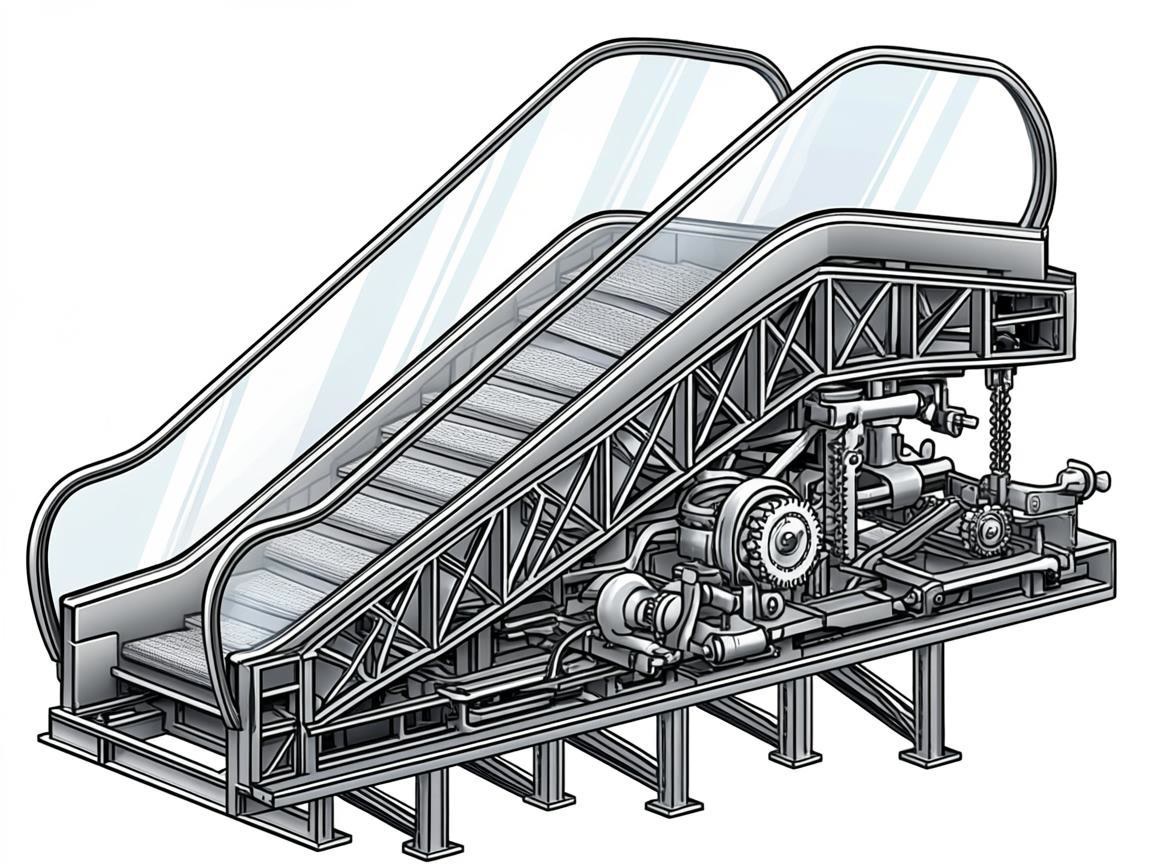
Escalators are power-driven, continuously moving stairways designed to transport high volumes of people between two levels in commercial buildings, transportation hubs, shopping centers, and public facilities. The components of escalators classified under HS Code 8431 are specialized to the unique requirements of continuous passenger transport, including high duty cycles, public safety, and smooth step-to-floor transitions. Meteor Löher, based in İzmir, is a pioneering Turkish escalator manufacturer that developed proprietary escalator technology through extensive R&D and became the first Turkish company to export escalators from Turkey.
Step Chains
Step chains are the massive continuous metal loop chains that connect and pull the individual escalator steps along the inclined track. Each step chain link is a precision-engineered steel component with carefully controlled pitch dimensions that mesh with the drive sprocket and idler sprockets at the top and bottom of the escalator. The chains must maintain exact synchronization between the left and right sides of the step band to prevent step misalignment, which could cause tripping hazards for passengers. Step chains operate under extreme tension and must withstand millions of load cycles over the lifetime of the escalator, making material quality, heat treatment, and lubrication critical factors. Turkish manufacturers of escalator components produce step chains using alloy steel with case-hardened surfaces and precision-machined pin holes, ensuring long service life and reliable performance in high-traffic installations.
Escalator Steps
Escalator steps are the individual grooved metallic or die-cast platforms that passengers stand on as they are carried up or down the escalator. Each step is a complex die-cast aluminum or steel component with a grooved tread surface (typically with cleats approximately 4mm deep) that provides traction for passengers' footwear and meshes with the comb plates at the top and bottom landings. The step has a wheel system on each side (typically four wheels per step) that rides on the step track rails inside the truss. Steps must be precisely manufactured to ensure consistent step-to-step spacing and level ride quality. Meteor Löher, as Turkey's leading escalator manufacturer, produces high-quality escalator steps as part of its comprehensive escalator product line, using advanced die-casting and machining processes to meet international safety and quality standards.
Handrail Drives
Handrail drives are the specialized internal motorized wheel systems that synchronize the speed of the moving handrails with the speed of the escalator steps. The handrail must move at exactly the same speed as the steps to prevent passengers from losing balance or being pulled forward or backward. Handrail drive systems typically consist of friction drive wheels that press against the inner surface of the handrail loop, driven by a separate motor or by the main escalator drive through a secondary transmission. The drive wheels are coated with a high-friction material (such as polyurethane or rubber) that grips the handrail without slipping, even under varying passenger loading conditions. Proper handrail drive adjustment and maintenance are essential for passenger safety, and Turkish escalator manufacturers include advanced handrail tensioning and monitoring systems in their designs.
Comb Plates
Comb plates are the rigid, teeth-like safety plates installed at the top and bottom landings of the escalator where the moving steps emerge from or disappear into the floor. The comb teeth mesh with the grooves on the step surfaces, creating a smooth transition between the moving steps and the fixed landing surface. The comb plates serve a critical safety function: they prevent objects, clothing, or body parts from being caught in the gap between the step and the floor. Comb plates are typically made from die-cast aluminum with precisely machined teeth that align perfectly with the step cleats. Modern comb plates incorporate monitoring switches that detect if a comb is broken or displaced, triggering an automatic escalator shutdown. Turkish manufacturers produce comb plates to match the specific step profiles of their escalator designs, ensuring optimal meshing and passenger safety.
Drive Units
Drive units are the combined assemblies of motors, gearboxes, and sprockets that provide the motive power for the entire escalator system. The main drive motor is typically a three-phase AC induction motor rated for continuous duty, connected to a helical or worm gear reducer that converts the high-speed, low-torque motor output into the low-speed, high-torque required to move the step chain and handrail drive system. The drive unit also includes the main drive sprocket, which engages with the step chains, and a brake assembly that holds the escalator stationary when power is removed or an emergency stop is activated. The drive unit is one of the most critical and complex components of the escalator, and its reliability directly determines the uptime and safety of the installation. Meteor Löher's 22,000 m² production facility in the İzmir Free Zone includes comprehensive drive unit manufacturing and testing capabilities, enabling the company to produce complete escalator drive systems for both domestic and export markets.
HS Code 8431 Classification & Subcategories
HS Code 8431 is organized into several subcategories that further refine the classification of lift, skip hoist, and escalator parts for customs and trade statistics purposes. The three primary subheadings are:
8431 20 — Parts of lifts, skip hoists or escalators (excluding those of heading 8428): This is the main catch-all subheading for elevator and escalator parts not specifically listed elsewhere. It covers the broadest range of components including guide rails, door operators, control panels, safety gears, interlocks, car frames, escalator steps, step chains, comb plates, and handrail drives. The vast majority of Turkey's elevator and escalator parts exports fall under this subheading.
8431 31 — Parts of elevators (lifts): This subheading specifically covers components that are exclusively designed for use in passenger and freight elevators. This includes lift car slings, door mechanisms, control panels, safety gears, overspeed governors, guide shoes, and other elevator-specific parts. This is one of the most significant subcategories for Turkish exporters, reflecting the country's strong position in elevator component manufacturing. For more details on international trade in these components, see UK Importers for HS Code 843131 Parts of Lifts.
8431 39 — Other parts of lifts, skip hoists or escalators: This residual subheading covers escalator-specific parts (steps, step chains, comb plates, handrail drives, drive units), skip hoist components (skip buckets, winch drums, track rollers, brake assemblies), and other miscellaneous parts not classified under 843120 or 843131. International trade data for this subheading is tracked by customs agencies worldwide. See also UK HS Code 843139 Importers and UK Importers HS Code 843139 Parts of Machinery.
Turkey's Export Advantage in Elevator & Escalator Parts Manufacturing
Turkey possesses several compelling advantages that have positioned it as a leading exporter of elevator and escalator parts under HS Code 8431. First, the country has a deep and well-developed industrial base in steel fabrication, precision machining, and metalworking, which provides the foundation for manufacturing high-quality elevator components. Second, Turkish labor costs remain competitive compared to Western European manufacturers, allowing Turkish companies to offer significant price advantages without compromising on quality. Third, Turkey's geographic location at the crossroads of Europe, Asia, and the Middle East provides logistical advantages for serving multiple export markets efficiently through major ports such as İzmir, Mersin, and Istanbul.
Fourth, many Turkish elevator parts manufacturers have invested heavily in modern production facilities, quality management systems, and international certifications, enabling them to meet the exacting requirements of European and global OEM customers. Fifth, Turkey's free zones, such as the İzmir Free Zone where Meteor Löher operates, provide additional incentives for export-oriented manufacturing, including tax advantages, streamlined customs procedures, and access to international logistics infrastructure. Companies like ASIR Elevator further demonstrate the breadth of Turkey's elevator industry ecosystem.
Safety Standards & Certifications
The manufacture and export of elevator, skip hoist, and escalator parts are subject to rigorous international safety standards that ensure the reliability and safe operation of these critical transportation systems. The most important standards include:
EN 81 Series (European Standard for Lifts): EN 81-20 and EN 81-50 are the current European standards governing the safety rules for the construction and installation of lifts. These standards cover all aspects of elevator safety including structural requirements, electrical systems, safety gear performance, and fire resistance. EN 81-1 and EN 81-2 cover safety rules for electric and hydraulic lifts respectively. Compliance with EN 81 is mandatory for elevator parts sold in the European Union and is widely recognized as a mark of quality in global markets.
EN 115 Series (European Standard for Escalators and Moving Walks): EN 115-1 is the European standard for the safety of escalators and moving walks, covering design, construction, installation, and maintenance requirements. This standard addresses critical safety aspects such as step-to-comb meshing, handrail speed synchronization, gap requirements, and emergency stopping systems.
CE Marking: CE marking is a mandatory conformity mark for products sold within the European Economic Area (EEA). Elevator and escalator parts that fall under the applicable EU Directives (particularly the Machinery Directive 2006/42/EC and the Lifts Directive 2014/33/EU) must bear the CE mark, indicating that they meet all applicable EU safety, health, and environmental protection requirements. Turkish exporters targeting European markets must ensure their products carry valid CE certification.
Technology Trends in Lift & Escalator Parts
The elevator and escalator parts industry is undergoing significant technological transformation, driven by advances in digital technology, connectivity, and energy efficiency. Several key trends are shaping the future of HS Code 8431 components:
IoT Integration and Smart Components: Modern elevator parts are increasingly equipped with IoT sensors and connectivity features that enable real-time monitoring of component health, performance, and wear patterns. Smart guide shoes with built-in vibration sensors, connected safety gears that report their status to cloud platforms, and intelligent door operators that optimize their opening and closing patterns based on usage data are becoming standard offerings from leading manufacturers. These smart components enable predictive maintenance strategies that reduce downtime and improve safety.
Predictive Maintenance: Building on IoT capabilities, predictive maintenance systems use machine learning algorithms to analyze data from elevator components and predict when maintenance will be required before a failure occurs. This approach reduces unplanned downtime, extends component lifespan, and lowers total cost of ownership for building owners and facility managers.
Energy-Efficient Components: Energy efficiency is a growing priority in the elevator industry, driving the development of regenerative drive systems that capture braking energy and feed it back into the building's power grid, LED-based car lighting systems, standby mode controllers that reduce power consumption when the elevator is idle, and high-efficiency gearless drive motors. These energy-saving components are increasingly required by green building certification programs such as LEED and BREEAM.
Advanced Materials: The use of advanced materials including high-strength low-alloy (HSLA) steels, carbon fiber composites for lightweight car frames, ceramic-coated bearings for extended service life, and self-lubricating polymers for guide shoes is improving the performance and durability of elevator components while reducing maintenance requirements.
Future Outlook for the Turkish Elevator Parts Industry
The future of Turkey's elevator and escalator parts industry appears highly promising, driven by several converging factors. Urbanization continues to accelerate across the Middle East, Central Asia, and Africa, creating sustained demand for new elevator installations and the replacement of aging equipment in established markets. Turkey's established relationships with these high-growth regions, combined with its competitive manufacturing costs and improving quality standards, position it well to capture an increasing share of global HS Code 8431 trade.
The Turkish government's continued investment in industrial zones, export incentives, and workforce development programs further strengthens the sector's competitiveness. Turkish manufacturers are increasingly moving up the value chain, from producing basic commodity parts to developing proprietary technologies and complete system solutions, as exemplified by Meteor Löher's development of domestically designed escalator technology. As digital technologies continue to transform the elevator industry, Turkish companies that invest in IoT-enabled components, predictive maintenance capabilities, and advanced manufacturing technologies will be best positioned to capitalize on the growing global demand for intelligent, energy-efficient elevator and escalator parts. The sector's integration with broader Turkish industrial capabilities in steel, electronics, and precision engineering creates a resilient and adaptable supply chain that can respond to evolving market demands.
Frequently Asked Questions (FAQ)
What is HS Code 8431 and what products does it cover?
HS Code 8431 covers "Parts of lifts, skip hoists or escalators." This harmonized system classification includes all specialized components used in the construction, installation, and maintenance of passenger elevators, freight lifts, industrial skip hoists, escalators, and moving walkways. The code is broken down into subcategories: 843120 (general parts of lifts, skip hoists, or escalators), 843131 (parts specifically for elevators), and 843139 (other parts including escalator and skip hoist components). Products under this code range from guide rails, safety gears, and door operators to escalator steps, step chains, and skip buckets. This classification is used by customs authorities worldwide to regulate and track international trade in these components.
What are the main parts of an elevator lift system?
The main parts of an elevator lift system include: the car sling (structural frame supporting the cabin), guide rails (vertical tracks keeping the car aligned), door operators (motorized mechanisms for opening/closing doors), safety gear (emergency braking devices that clamp onto guide rails), interlock mechanisms (electromechanical locks preventing door opening when the car is not at a landing), control panels (electronic units managing floor commands and system operations), drive machines (motors and gearboxes powering the elevator), suspension systems (steel ropes and compensation chains), and buffers (shock-absorbing devices at the bottom of the shaft). Additional components include overspeed governors, inverters, encoders, car operating panels (COPs), landing operating panels (LOPs), photocells, and load weighing devices.
How do skip hoist components differ from elevator parts?
Skip hoist components differ from elevator parts primarily in their design load ratings, duty cycles, and environmental protection requirements. While elevator parts are designed for passenger comfort and precise stopping, skip hoist components must handle much heavier loads (multi-ton buckets of bulk materials), more aggressive duty cycles (continuous loading and dumping), and harsher environments (dust, moisture, abrasive materials, and outdoor exposure). Skip hoist brake assemblies, for example, must halt massive material weights on steep inclines, compared to elevator brakes that stop passenger cars in controlled conditions. Skip buckets are heavy-duty dumping containers rather than passenger cabins, and their track rollers must withstand extreme contamination from cement dust and construction debris. The winch drums and wire ropes used in skip hoists are also significantly more robust than their elevator counterparts.
What are the key components of an escalator system?
The key components of an escalator system include: step chains (massive continuous metal loop chains connecting all steps), escalator steps (individual grooved platforms that passengers stand on), handrail drives (motorized wheel systems synchronizing handrail speed with step speed), comb plates (teeth-like safety plates at top and bottom landings), drive units (motor, gearbox, and sprocket assemblies powering the system), the truss (the structural framework supporting the entire escalator), balustrades and glass panels (the side barriers and handrails), and the newel bases and returns (the curved sections at the top and bottom where steps transition between the inclined and horizontal paths). Each of these components must be precision-manufactured to ensure smooth, safe, and reliable operation in high-traffic public environments.
Why is Turkey a leading exporter of elevator and escalator parts?
Turkey is a leading exporter of elevator and escalator parts due to several key advantages: a deep industrial base in steel fabrication and precision machining, competitive labor costs compared to Western European manufacturers, strategic geographic location bridging Europe, Asia, and the Middle East, significant investment in modern production facilities and quality management systems, access to free zones with export incentives (such as the İzmir Free Zone), and a skilled workforce with decades of experience in the elevator industry. Turkish manufacturers also benefit from strong domestic demand driven by the country's rapid urbanization and construction boom, which has helped the industry achieve economies of scale. Companies like Meteor Löher have demonstrated the ability to develop proprietary technologies and export to advanced markets including Germany, Austria, and the United States.
What safety standards apply to lift and escalator parts?
The primary safety standards applying to lift and escalator parts include: EN 81 series (European standards for elevator safety, including EN 81-20/50 for construction and EN 81-1/2 for electric and hydraulic lifts), EN 115 series (European standards for escalator and moving walk safety), ISO 8100 series (international standards for elevator construction), the EU Machinery Directive 2006/42/EC, the EU Lifts Directive 2014/33/EU, and ASME A17.1 (American National Standard for elevators and escalators). CE marking is mandatory for elevator and escalator parts sold in the European Economic Area. Additionally, components must comply with specific testing and certification requirements including type testing for safety gears, endurance testing for door operators, and load testing for suspension systems. Many Turkish manufacturers maintain ISO 9001 quality management certifications in addition to product-specific certifications.
What materials are used in manufacturing elevator components?
Elevator components are manufactured from a wide range of materials selected for their specific mechanical properties. Guide rails are made from cold-drawn or machined carbon steel (typically ST37 or ST52 grades). Safety gears use high-friction composite materials and hardened steel. Car frames and slings are fabricated from high-tensile structural steel. Escalator steps are typically die-cast aluminum alloy. Step chains use alloy steel with case-hardened surfaces and heat-treated pins. Door panels may be made from stainless steel, painted mild steel, or glass. Suspension ropes are manufactured from high-carbon steel wire with fiber or steel cores. Control panels incorporate electronic components, printed circuit boards, and enclosed steel cabinets. Bearings throughout the system use hardened chrome steel with sealed lubrication. Newer materials being adopted include carbon fiber composites for lightweight car structures, self-lubricating polymers for guide shoes, and ceramic coatings for extended bearing life.
How has technology improved modern lift and escalator parts?
Technology has dramatically improved modern lift and escalator parts in several ways. IoT sensors and connectivity enable real-time monitoring of component health and performance data. Machine learning algorithms enable predictive maintenance, identifying potential failures before they occur. Regenerative drive systems capture braking energy and return it to the power grid, reducing energy consumption by 20-40%. Gearless permanent magnet motors offer higher efficiency, quieter operation, and reduced maintenance compared to traditional geared machines. LED lighting and standby mode controllers reduce power consumption during idle periods. Advanced materials like carbon fiber composites reduce component weight while maintaining strength. Microprocessor-based controllers implement sophisticated dispatching algorithms that optimize passenger wait times and energy use. Smart door operators with variable frequency drives provide smoother, quieter door operation. Digital shaft information systems replace traditional mechanical switches, reducing installation complexity and improving reliability. These technological advances are making modern elevators and escalators safer, more energy-efficient, and more reliable than ever before.
Yorumlar - Yorum Yaz