


ELEVATOR GUIDE RAIL | MANUFACTURERS | TÜRKİYE
Top Elevator Guide Rail Manufacturers in Turkey: A Complete Industry Guide
Comprehensive profiles of Turkey's leading elevator guide rail producers, production capacities, technologies, and export capabilities
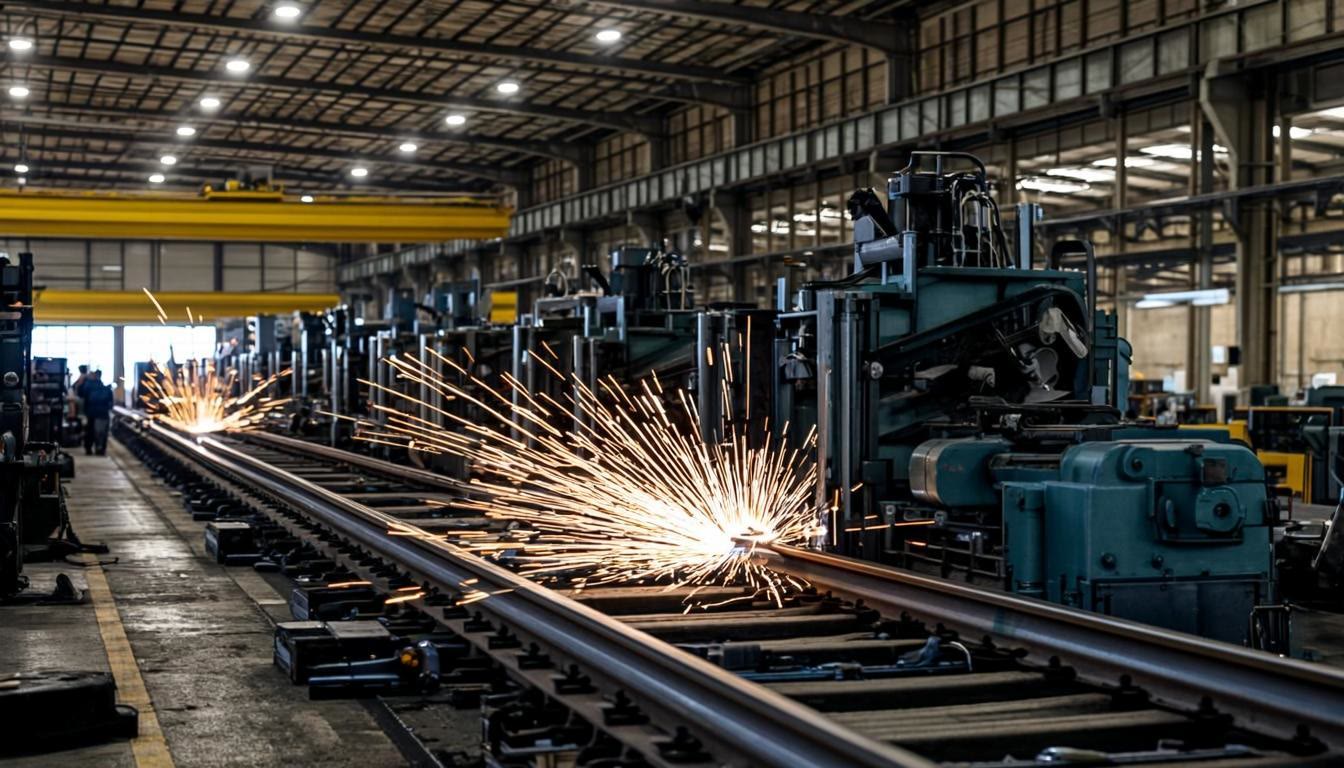
Turkey has established itself as one of the world's most significant producers of elevator guide rails, supplying both domestic and international markets with high-quality precision-engineered steel products. The country's elevator guide rail industry benefits from a robust steel manufacturing base, strategic geographic location between Europe and Asia, and decades of accumulated engineering expertise. Turkish manufacturers produce guide rails compliant with international standards, including EN 81 and ISO certifications, making them trusted suppliers for elevator companies across more than 100 countries worldwide. This guide provides detailed profiles of four leading Turkish elevator guide rail manufacturers, along with an in-depth industry analysis covering production technologies, market dynamics, and future outlook.
Table of Contents
Leading Elevator Guide Rail Manufacturers in Turkey
1. Asray Asansor
Website: www.asray.com
| Location | Pelitli Mh. Pelitli Yolu Cd. No: 133, Gebze, Kocaeli |
| Phone | +90 262 751 14 35 |
| asray@asray.com | |
| Founded | Years of accumulated industry experience |
| Annual Capacity | 30,000 tons (machined rails at 75% efficiency) |
| Specialty | B and BE type machined guide rails, cold-drawn rails |
Asray Asansor is a specialized Turkish manufacturer focused exclusively on elevator guide rails, operating from its facility in Gebze, Kocaeli, within the Marmara Region near Istanbul. The company has positioned itself as a synonym for elevator guide rails in Turkey, producing its products with nearly 100% domestic technology and accumulated years of sector-specific experience. Asray operates two separate cold-drawing production lines alongside its specialized rail machining equipment, giving it the flexibility to produce both cold-drawn and machined guide rails to meet varying market demands.
What distinguishes Asray from many competitors is its unique multi-national collaborative machining technique, which the company describes as being used by very few manufacturers worldwide. The machining line can process one bar of rail every 40 seconds, translating to a production capacity of 40 tons per 8-hour shift. At 75% operational efficiency, the facility achieves an annual machined rail output of approximately 30,000 tons. In addition to standard guide rails, Asray also manufactures the Laser Guide Rail Assembly Jig (Lazer Kilavuz Ray Montaj Mastari), a precision alignment inspection device that demonstrates the company's commitment to quality assurance and technological innovation in the elevator sector.
2. Celik Ray (Celikoglu Demir Celik)
Website: www.celikray.com
| Location | Karabuk Organized Industrial Zone (factory); Konya (central sales); Istanbul (regional office) |
| Phone | Konya: +90 332 350 18 28 | Istanbul: +90 216 504 37 01 |
| Founded | 1989 (first rolling mill); 1993 (Celikoglu A.S. officially founded) |
| Annual Capacity | 200,000 tons total production capacity |
| Employees | Nearly 500 specialized staff and engineers |
| Specialty | Full range T45-T125 guide rails (A cold-drawn and B machined series) |
Celik Ray (Celikoglu Demir Celik San. ve Tic. A.S.) is Turkey's leading elevator guide rail manufacturer and ranks as the second-largest producer in the world after China. The company was established through the partnership of two families, the Ozcelik family from Konya and the Pasalak family from Karabuk, merging their respective steel industry expertise to create a powerhouse in heavy industry. Operating under the motto of continuously integrating the world's most advanced technologies, Celik Ray has grown from a modest 100 tons per month operation in 1989 to a massive 200,000 ton annual capacity enterprise spanning 36,000 square meters of closed production area.
The company offers the most comprehensive product range among Turkish guide rail manufacturers, producing both A-series (cold-drawn) and B-series (machined) guide rails in sizes from T45 to T125. Celik Ray exports directly to over 50 countries and indirectly to approximately 100 countries through distribution partners, covering markets in the Middle East, Americas, Asia, and Europe. The company's remarkable growth trajectory is reflected in its ISO Istanbul Chamber of Industry ranking, climbing from #430 in 2019 to #319 in 2021, a rise of 93 positions in just two years. With current production capacity capable of meeting 4 to 5 times Turkey's entire domestic demand, exports are not merely a preference but a strategic necessity for Celik Ray.
3. Turkeli Ray (Turkeli Ray San. ve Tic. A.S.)
Website: www.turkeliray.com
| Location | Cardak Ozdemir Sabanci OSB, 6th Cadde No: 1/0, Cardak / Denizli |
| Phone | +90 258 371 45 73 |
| Founded | 1947 (over 75 years of history, Turkey's oldest guide rail manufacturer) |
| Production Area | 22,300 m2 closed production area |
| Employees | Approximately 80 |
| Specialty | B-type machined |
Turkeli Ray holds the distinction of being Turkey's oldest elevator guide rail manufacturer, with roots dating back to 1947, representing over 75 years of continuous operation in the sector. Operating from its modern facility in the Cardak Organized Industrial Zone in Denizli, Turkeli Ray has become the symbol of domestic B-type machined guide rail production in Turkey. The company's philosophy, "Quality is not controlled, it is produced!", reflects a deep-rooted commitment to embedding quality at every stage of the manufacturing process, from raw material input through to final product shipment.
A key differentiator for Turkeli Ray is its exceptionally high degree of vertical integration. The company produces approximately 95% of its technology in-house, with experienced engineering staff developing proprietary manufacturing processes and equipment. This approach gives Turkeli Ray remarkable control over product quality and supply chain reliability. With 22,300 square meters of closed production area and a workforce of approximately 80 employees, the company maintains efficient operations while producing B-type machined guide rails that meet both national and international quality standards. Turkeli Ray markets its products globally, emphasizing exports from Denizli to the entire world, and serves as a benchmark for Turkish domestic manufacturing excellence in the elevator industry.
4. Aygunsan Demir Celik
Website: www.aygunsan.com
| Location | Kurtulus Mah., Karabuk (headquarters); 3 factories across Karabuk region |
| Phone | +90 370 712 02 70 |
| info@aygunsan.com | |
| Founded | 1992 by Ismail Aygun in Safranbolu |
| Total Capacity | 300,000 tons/year (across all product lines) |
| Employees | 300+ team members |
| Elevator Brand | AYGUNRAY (since 2011) |
| Specialty | Multi-product steel producer with dedicated elevator guide rail division |
Aygunsan Demir Celik is a major Turkish steel conglomerate that has expanded into elevator guide rail manufacturing under the AYGUNRAY brand, which was launched in 2011. Founded by Ismail Aygun in 1992 in Safranbolu, the company has grown from a small rolling mill into a multi-facility steel empire spanning 75,000 square meters of closed production area with a total annual capacity of 300,000 tons. Aygunsan operates across the entire steel value chain, from its induction furnace meltshop (commissioned in 2020 with 150,000 tons/year capacity) through hot rolling, cold drawing, and specialized elevator guide rail production.
Under the AYGUNRAY brand, the company produces a comprehensive range of elevator guide rails including 50T/A, 70T/A, 89T/B, and 90T/B models, along with door rails and connection flanges. The dedicated guide rail facility, established in 2011, is fully automated and represents a significant strategic investment in the growing elevator sector. Aygunsan exports approximately 70% of its total production to over 50 countries worldwide, with markets spanning the Middle East, Europe, Central Asia, and the Caucasus region. The company's three factories across the Karabuk region include the original Safranbolu facility (1992), a second plant in Yesilmahalle (2005), and a third facility in the Karabuk Organized Industrial Zone (2017), demonstrating continuous expansion and commitment to the steel and elevator rail sectors.
Turkey's Elevator Guide Rail Industry: Production, Trade, and Future Trends
The Evolution of Turkey's Guide Rail Manufacturing Sector
Turkey's elevator guide rail industry has undergone a remarkable transformation over the past several decades, evolving from modest local producers into globally competitive manufacturers with world-class production facilities. The sector's growth has been driven by several converging factors: Turkey's rapid urbanization and construction boom, increasing demand for modern elevator systems in both residential and commercial buildings, and the country's established strength in iron and steel production. The four companies profiled in this guide collectively represent hundreds of years of combined manufacturing experience, billions of tons of cumulative production capacity, and export relationships spanning over 100 countries across every continent.
The historical development of Turkey's guide rail sector mirrors the broader trajectory of Turkish industrialization. Companies like Turkeli Ray, founded in 1947, represent the earliest generation of Turkish manufacturers who built domestic production capabilities from the ground up. The 1980s and 1990s saw the emergence of new players such as Asray in Gebze and Celik Ray in Karabuk, each bringing specialized expertise and innovative production approaches. The 2000s and 2010s witnessed a period of consolidation, technological upgrading, and aggressive capacity expansion, culminating in the current landscape where Turkish manufacturers are recognized as among the world's leading guide rail producers.
Production Technologies and Quality Standards
Elevator guide rail production involves two primary manufacturing processes: cold drawing and machining. Cold-drawn guide rails (A-series) are produced by pulling steel bars through a series of dies to achieve precise dimensional tolerances and improved surface finish. This process requires sophisticated cold-drawing machinery, precision temperature control, and careful material selection to ensure consistent mechanical properties. Machined guide rails (B-series) undergo additional processing where the rail surfaces are milled to achieve exact dimensional specifications required for smooth elevator car travel along the guide rails.
Turkish manufacturers employ a range of production technologies, from traditional hot rolling of billets into intermediate shapes to precision cold-drawing and CNC machining of final rail profiles. Celik Ray offers the broadest product range, producing both A-series and B-series rails from T45 to T125, while Turkeli Ray specializes exclusively in B-type machined rails with proprietary in-house technology. Asray distinguishes itself with a unique multi-national machining technique that achieves production speeds of one rail bar every 40 seconds. Aygunsan brings an integrated steelmaking capability through its meltshop, allowing vertical control from raw steel production through to finished guide rails.
Market Dynamics and Export Performance
The Turkish elevator guide rail market is characterized by significant overcapacity relative to domestic demand, which has compelled manufacturers to develop robust export strategies. Celik Ray, the largest producer, estimates that its 200,000-ton annual capacity can meet 4 to 5 times Turkey's entire domestic guide rail demand, underscoring the export-oriented nature of the industry. Turkey's guide rail exports reach markets in the Middle East, Europe, the Americas, Asia, and Africa, with collective indirect exports reaching approximately 100 countries through distribution partnerships and intermediaries.
The competitive landscape benefits from Turkey's strategic geographic position, bridging European and Asian markets with relatively low logistics costs. For comprehensive data on Turkey's broader iron and steel sector, which provides the essential raw materials for guide rail production, the Turkish Iron and Steel Industry Report provides valuable insights. The Turkish hot rolled steel products sector directly supplies guide rail manufacturers with the intermediate steel products needed for further processing. Similarly, the hot rolled steel bar exporters play a critical role in the supply chain.
Industry Challenges and Opportunities
Despite its strong position, Turkey's elevator guide rail industry faces several challenges. Global competition from Chinese manufacturers, who dominate the world market with massive scale advantages, pressures Turkish producers to differentiate through quality, certification compliance, and customer service. Currency volatility in the Turkish lira affects both export competitiveness and the cost of imported raw materials and machinery. The cyclical nature of the global construction industry creates demand fluctuations that require manufacturers to maintain flexible production schedules and diverse market portfolios.
Looking ahead, the industry is well-positioned to capitalize on several growth opportunities. The global trend toward urbanization continues to drive demand for elevator systems in emerging markets across Africa, Southeast Asia, and Central Asia. Turkey's established trade relationships and geographic proximity to these regions provide a natural advantage. The increasing sophistication of elevator systems, including high-speed elevators for supertall buildings and specialized applications in commercial and industrial settings, creates demand for premium guide rail products with tighter tolerances and advanced surface treatments. Turkish manufacturers with investments in precision machining and quality assurance capabilities are well-positioned to serve these growing market segments.
Frequently Asked Questions
What are elevator guide rails and why are they important?
Elevator guide rails are precision-engineered steel profiles that serve as the vertical track along which elevator cars travel within a shaft. They provide stability, ensure smooth and safe movement of the elevator car, and resist lateral forces during operation. Guide rails are classified into two main types: A-series (cold-drawn) rails that provide the basic guiding function, and B-series (machined) rails that undergo additional precision machining for superior surface quality and dimensional accuracy. The quality of guide rails directly impacts elevator safety, ride comfort, noise levels, and long-term reliability, making them one of the most critical components in any elevator installation.
Which countries import elevator guide rails from Turkey?
Turkish elevator guide rail manufacturers export to a global market spanning more than 100 countries. Direct exports reach over 50 countries, with significant markets in the Middle East (Iraq, Saudi Arabia, UAE), Europe (Italy, UK, Germany), the Americas, Asia, and Africa. Through distribution partners and intermediaries, Turkish guide rails indirectly reach approximately 100 countries worldwide. The geographic diversity of Turkey's export markets reflects the international quality certifications and competitive pricing that Turkish manufacturers offer.
What quality standards apply to elevator guide rails?
Elevator guide rails produced in Turkey comply with international standards including EN 81 (European standard for safety rules for constructio
What is the difference between cold-drawn and machined guide rails?
Cold-drawn (A-series) guide rails are produced by pulling steel bars through dies to achieve precise cross-sectional dimensions and improved surface quality. They are suitable for standard elevator applications where basic guiding functionality is sufficient. Machined (B-series) guide rails undergo additional CNC milling or grinding operations to achieve even tighter dimensional tolerances and superior surface finish. B-series rails are required for higher-speed elevators and applications where ride smoothness and noise reduction are priorities. Machined rails are more expensive to produce but offer significantly better performance in demanding installations.
How do I contact Turkish elevator guide rail manufacturers?
Each manufacturer profiled in this guide provides direct contact information. Asray Asansor can be reached at +90 262 751 14 35 or asray@asray.com, with their factory located in Gebze, Kocaeli. Celik Ray has offices in Konya (+90 332 350 18 28), Istanbul (+90 216 504 37 01), and their factory in Karabuk. Turkeli Ray operates from Denizli (+90 258 371 45 73). Aygunsan Demir Celik is based in Karabuk (+90 370 712 02 70, info@aygunsan.com). For information on Turkey's broader elevator and lift sector, including related lift and skip hoist exporters and elevator parts importers in the UK, the ithalatihracat.biz platform provides extensive trade data and company directories.
What is Turkey's position in the global elevator guide rail market?
Turkey is one of the world's leading elevator guide rail producers, ranking second globally after China in terms of production capacity. The country's largest manufacturer, Celik Ray, alone produces 200,000 tons annually from its 36,000 square meter facility in Karabuk. When combined with the output of other Turkish producers such as Asray, Turkeli Ray, and Aygunsan, Turkey's total guide rail production capacity represents a significant share of global output. Turkish manufacturers are recognized internationally for their quality, competitive pricing, and reliable supply chain, making Turkey a preferred sourcing destination for elevator companies worldwide.
What production capacities do Turkish guide rail manufacturers have?
Turkish guide rail manufacturers have a combined production capacity exceeding 500,000 tons per year across all product lines. Celik Ray leads with 200,000 tons annual capacity, followed by Aygunsan with 300,000 tons total steel capacity (including guide rails under the AYGUNRAY brand). Asray produces approximately 30,000 tons of machined rails annually, while Turkeli Ray maintains focused B-type machined rail production from its 22,300 square meter facility. For context on Turkey's broader steel sector that underpins this production, the Turkish Iron and Steel Industry Report provides comprehensive production and trade statistics.
Yorumlar - Yorum Yaz