


MDF | IMPORTERS| UKRAINE
Summary
Ukraine is one of the most significant MDF (Medium Density Fibreboard) import markets in Eastern Europe, with fiberboard imports valued at approximately $115 million in the latest reporting period and volumes recovering strongly after the sharp decline caused by the full-scale invasion in 2022. Poland has emerged as the dominant replacement supplier following the complete ban on Russian and Belarusian wood products, while Turkey ($25.75 million in fiberboard exports in 2024) and Germany (home to the Egger Group) serve as major additional sources. The domestic MDF industry, led by Kronospan Ukraine ($210 million expansion) and the Korosten MDF Plant (300,000 m³/year capacity), is undergoing significant investment and consolidation. Ukraine's construction sector grew 24% in 2025, furniture exports exceeded $1.035 billion, and the total reconstruction need is estimated at $588 billion by the World Bank, all driving sustained and growing demand for MDF panels across furniture manufacturing, interior construction, doors, and flooring applications.
📑 Table of Contents
- Ukraine MDF Import Market Overview: Recovery, Trade Data and Key Statistics
- Key MDF Exporters to Ukraine: Poland, Germany, Turkey and Emerging Suppliers
- Ukraine Domestic MDF Industry: Kronospan, Korosten Plant and Swiss Krono
- MDF Applications and Market Trends in Ukraine's Rebuilding Economy
- Frequently Asked Questions (FAQ)
- Related Importer Directories
Ukraine MDF Import Market Overview: Recovery, Trade Data and Key Statistics
An authoritative overview of Ukraine's MDF import market, examining trade volumes, pricing trends, and the ongoing post-invasion recovery that is reshaping the wood-based panel supply chain across Eastern Europe.
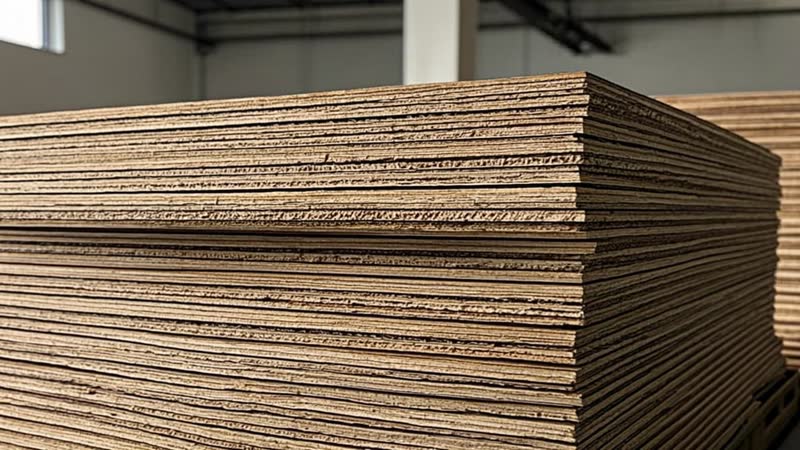
The Ukrainian MDF import market has demonstrated remarkable resilience following the disruption caused by the full-scale Russian invasion in February 2022. Fiberboard imports classified under HS code 4411, which includes MDF and HDF products, were valued at approximately $115.37 million in the February 2025 to January 2026 reporting period, according to ExportGenius trade data. This represents a significant recovery from the sharp decline of 2022, when total panel imports (including particleboard, MDF, and plywood) were roughly halved from the pre-war level of $312 million recorded in 2021 to approximately $145 million. The average MDF import price stood at $522 per cubic meter in 2024, reflecting a decrease of 15.1% year-on-year, a trend that has benefited Ukrainian importers and furniture manufacturers by reducing input costs.
Volume data confirms the recovery trajectory: fiberboard imports grew from 30,300 cubic meters in 2023 to 39,600 cubic meters in 2024, representing a 30.7% year-on-year increase. This growth has been driven primarily by the recovery of Ukraine's furniture export sector, which reached $1.035 billion in 2025 (up 14.3% from 2024) and now stands only 1.5% below the pre-war peak of $1.05 billion recorded in 2021. The construction sector has also been a major demand driver, growing 24% in monetary terms in 2025 to reach approximately UAH 248 billion (EUR 5.3 billion). Ukraine's total reconstruction needs, estimated by the World Bank at $588 billion in February 2026, ensure that long-term demand for MDF and other building materials will remain robust for years to come. The broader European wood-based panel market consumed 98 million cubic meters valued at $41.3 billion in 2024, providing context for Ukraine's position as a significant but regionally concentrated market within this larger ecosystem.
Key MDF Exporters to Ukraine: Poland, Germany, Turkey and Emerging Suppliers
A detailed analysis of the countries and companies supplying MDF to Ukraine, examining how geopolitical shifts and trade sanctions have restructured the supplier landscape since 2022.
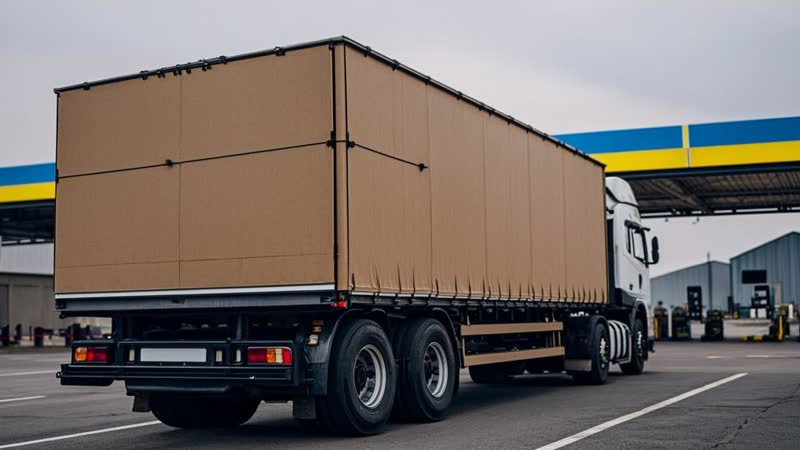
The MDF supplier landscape for Ukraine has undergone a fundamental restructuring since 2022, driven by the complete elimination of Russian and Belarusian wood product imports through sanctions and wartime trade restrictions. Poland has emerged as the dominant MDF and wood-based panel exporter to Ukraine, leveraging its geographic proximity, shared land border, and the duty-free access provided by the EU-Ukraine DCFTA (Deep and Comprehensive Free Trade Area). Polish producers benefit from shorter transport distances, established cross-border logistics networks, and the ability to deliver via both road freight and rail through multiple border crossing points including Mostyska, Medyka, and Przemyśl. The Poland-Ukraine trade corridor has become the single most important supply chain route for wood-based panels entering the Ukrainian market.
Germany, home to the globally recognized Egger Group, serves as the premium MDF supplier to the Ukrainian market. Egger's high-quality laminated MDF and HDF panels are distributed in Ukraine through major dealer networks including Kronas (КРОНАС) and ViYAR (ВІЯР), commanding premium pricing due to their superior finish quality, extensive decor range, and strong brand reputation among Ukrainian furniture manufacturers. Turkey has rapidly emerged as the third major supplier, exporting $25.75 million worth of fiberboard to Ukraine in 2024. Turkey has become Europe's largest MDF producer, surpassing Germany in production capacity, and its growing exports to Ukraine reflect both competitive pricing and Turkey's strategic positioning as a non-EU supplier that benefits from its own bilateral trade arrangements with Ukraine. Romania and Austria serve as additional notable suppliers, while China maintains a minor but potentially growing presence in the budget-price segment, though logistics challenges through overland routes from Chinese ports limit its competitiveness. Under the DCFTA, virtually all EU-origin MDF enters Ukraine at 0% duty, while non-EU origins face standard MFN duties of 5-10% for fiberboard products under HS code 4411.
Ukraine Domestic MDF Industry: Kronospan, Korosten Plant and Swiss Krono
An in-depth look at Ukraine's domestic MDF production capacity, including the major manufacturing facilities, recent investments, and the industry consolidation that is reshaping the competitive landscape.
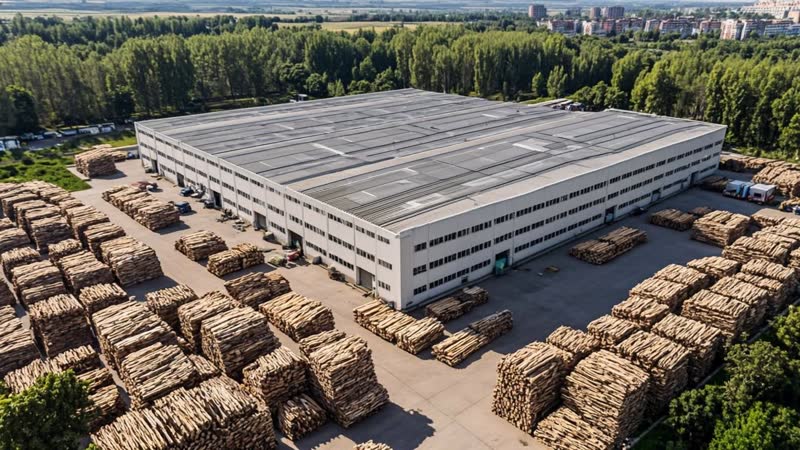
Ukraine's domestic MDF production industry is anchored by three major manufacturing operations that collectively supply a significant portion of the domestic market's needs. The Korosten MDF Plant, operating under the REZULT brand, holds the distinction of being Ukraine's first dedicated MDF manufacturing facility when it was established in 2011. Located in Korosten, Zhytomyr Oblast, the plant operates a full Siempelkamp (Germany) production line with a capacity of 900 cubic meters per day and 300,000 cubic meters per year of board-type materials including raw MDF, HDF boards, laminated MDF, and laminate flooring. The plant produces standard MDF at a density of 760-780 kg/m³ (up to 900 kg/m³ on special order) in the standard board size of 2,800 x 2,070 mm. Notably, Kronospan has received approval from Ukraine's Antimonopoly Committee (AMKU) to acquire the Korosen plant, a move that would significantly consolidate Kronospan's dominant position in the Ukrainian market.
Kronospan Ukraine (Кроноспан Україна) represents the largest international wood-based panel manufacturer operating in the country, with facilities in Novovolynsk (laminating plant since 2004) and a major new investment in Rivne. In 2024, Kronospan announced a $210 million expansion in Ukraine, including a new OSB production line in Rivne and a chipboard facility in Novovolynsk. The company's Ukrainian operations produce melamine-faced particleboard (ЛДСП), MDF, HDF, OSB, lacquered panels, worktops, flooring, and facade panels, distributed through both direct sales and an extensive dealer network across the country. Swiss Krono Ukraine, located in Yavoriv in Lviv Oblast, operates as part of the Swiss Krono Group (headquartered in Switzerland with facilities across Europe and the USA), producing particleboards under the Swisspan brand, MDF, OSB, and laminate flooring. The company has confirmed its operational independence from Swiss Krono's Russian operations. Domestic MDF from Ukrainian producers is typically 15-25% cheaper than imported equivalents, though the range of available finishes and decors remains more limited compared to premium European imports from brands like Egger.
MDF Applications and Market Trends in Ukraine's Rebuilding Economy
How MDF is being used across Ukraine's furniture, construction, and interior design sectors, and the market trends shaping demand in the context of post-war reconstruction and economic recovery.

MDF panels serve as a foundational material across multiple sectors of Ukraine's economy, with furniture manufacturing representing the single largest application. The Ukrainian furniture industry, valued at approximately EUR 929.8 million in 2026 estimates, relies heavily on MDF for cabinet carcasses, shelving systems, wardrobes, desks, and modular furniture components. Ukrainian furniture exports have staged an impressive recovery, reaching $1.035 billion in 2025 (up 14.3% year-on-year), driven by competitive pricing and the market share gains achieved as Russian and Belarusian furniture producers were excluded from EU and other Western markets. Ukrainian furniture manufacturers have gained significant traction in European markets, directly increasing demand for both domestically produced and imported MDF panels.
The construction and reconstruction sector represents the fastest-growing source of MDF demand in Ukraine. With construction activity expanding 24% in 2025 and the total reconstruction need estimated at $588 billion, MDF is being used extensively for wall paneling, partitions, interior doors, skirting boards, built-in cabinetry, and architectural elements in both residential and commercial reconstruction projects. The reconstruction market is valued at $45.2 billion in 2025 with a projected compound annual growth rate of 12.3% through 2034. Green building trends are reshaping MDF demand patterns, with growing requirements for E0/E1 low-emission formaldehyde MDF panels, FSC/PEFC certified wood products, and sustainably sourced materials that align with EU Green Deal standards. Moisture-resistant MDF (MR MDF) is increasingly specified for kitchen and bathroom applications in reconstruction projects, while fire-rated MDF is gaining demand for commercial and public building applications. The logistics of MDF supply is also evolving, with a EUR 73.5 million EU-funded standard-gauge railway project from Lviv to the Polish border at Mostyska scheduled to begin in 2026, which will significantly improve freight efficiency and reduce transportation costs for MDF imports from EU suppliers.
Frequently Asked Questions (FAQ)
What is the current size of the Ukraine MDF import market?
Ukraine imported approximately $115 million in fiberboard (HS code 4411) in the February 2025 to January 2026 period. MDF imports have been recovering since the sharp decline caused by the full-scale invasion in 2022, when panel imports were roughly halved from $312 million (2021) to $145 million. Average MDF import prices stood at $522 per cubic meter in 2024, representing a 15.1% decrease year-on-year that has benefited Ukrainian buyers.
Which countries export the most MDF to Ukraine?
Poland is the number one MDF and wood-based panel exporter to Ukraine, leveraging geographic proximity and the EU-Ukraine DCFTA duty-free trade agreement. Germany (home to Egger Group) serves as the premium supplier. Turkey exported $25.75 million in fiberboard to Ukraine in 2024 and has become Europe's largest MDF producer. Romania and Austria are additional notable suppliers. Russia and Belarus are completely banned due to sanctions.
What customs duties apply to MDF imported into Ukraine?
Under the EU-Ukraine DCFTA, most EU-origin MDF enters Ukraine duty-free. For non-EU origins, standard MFN duties of 5 to 10 percent ad valorem typically apply for fiberboard classified under HS code 4411. A Certificate of Origin is mandatory for all imports and is required to claim preferential tariff rates under the DCFTA agreement. Ukraine applies ad valorem tariffs for the vast majority of tariff lines.
What certifications are needed to import MDF into Ukraine?
Importers of MDF into Ukraine need several key documents: a Certificate of Origin for preferential tariff rates under the DCFTA, a phytosanitary certificate to ensure no pest contamination, conformity documentation under UkrSTD/DSTU Ukrainian state standards where applicable, and increasingly E0/E1 formaldehyde emission class certification. EU products with CE marking are generally recognized. FSC and PEFC certification is in growing demand for export-oriented furniture production.
Who are the main MDF producers in Ukraine?
The key domestic MDF producers are: Korosten MDF Plant (brand REZULT, 300,000 cubic meters per year capacity, founded 2011 as Ukraine's first dedicated MDF facility), Kronospan Ukraine (particleboard, OSB, melamine panels with a $210 million expansion ongoing), and Swiss Krono Ukraine (particleboards under the Swisspan brand, MDF, OSB in Yavoriv, Lviv Oblast). Kronospan is seeking to acquire the Korosten MDF plant, which would further consolidate its dominant market position.
How has the war affected MDF imports and production in Ukraine?
The full-scale invasion caused a 5.4 percent decline in wood-based panel production in 2022, halved panel imports, disrupted Black Sea shipping routes, doubled transport costs, and completely eliminated Russian and Belarusian suppliers through sanctions. However, since 2023 the market has been recovering strongly. Fiberboard imports grew from 30,300 cubic meters in 2023 to 39,600 cubic meters in 2024. The construction sector grew 24 percent in 2025, and furniture exports exceeded $1.035 billion, both driving renewed MDF demand.
What types of MDF are most in demand in Ukraine?
The most popular MDF types in the Ukrainian market are: standard raw MDF for general furniture manufacturing, melamine-faced MDF for ready-to-use furniture components and doors, moisture-resistant MDF (MR MDF) for kitchen and bathroom applications, and HDF (High Density Fiberboard) for laminate flooring cores. Fire-rated MDF is a niche but growing category for commercial reconstruction projects. Lacquered and laminated MDF are used in premium furniture and commercial interior applications.
How does MDF reach Ukraine from European suppliers?
The primary import route is overland through Poland-Ukraine border crossings at Mostyska, Medyka, and Przemyśl via truck and rail freight. Black Sea ports at Odesa and Chornomorsk provide supplementary maritime access, while Danube River ports at Reni and Izmail offer alternative routes for smaller cargo volumes. A EUR 73.5 million EU-funded standard-gauge railway project from Lviv to the Polish border starting in 2026 will significantly improve freight logistics and reduce costs for MDF imports.
What is the market outlook for Ukraine MDF imports in 2025 and 2026?
The outlook is strongly positive for Ukraine's MDF market. Construction is growing 16.2 percent in 2025, furniture exports reached $1.035 billion (up 14.3 percent), total reconstruction needs are estimated at $588 billion, and MDF panel prices are softening by approximately 4 percent in 2025. The global MDF and HDF market is projected to grow from $27.2 billion to $45.4 billion by 2033. Domestic production expansion by Kronospan ($210 million investment) combined with strong import recovery from Poland, Germany, and Turkey points to robust market growth.
Who are the major MDF distributors in Ukraine?
Key MDF distributors in Ukraine include: Kronas (КРОНАС) as the major distributor of Egger, Kronospan, and Swiss Krono products with multiple Kyiv warehouses; ViYAR (ВІЯР) for nationwide distribution of Kronospan and Egger; REZULT (Korosten) for domestic MDF with direct sales; Foreest for wood panel retail with online ordering; and Decorshop for interior decoration panels. Kronospan Ukraine also sells directly through its dealer network across the country.
Related Importer Directories
Explore related wood products, timber, and construction materials importer directories on TurkExim:
Yorumlar - Yorum Yaz